
A foreman that never clocks off
The steering agent watches the runs it starts and is woken the moment one needs something, at 3pm or 3am. It answers coders from your docs and reviews their work before anything reaches you.
Mission Control · the steering layer of the Software Factory
Mission Control's steering agent runs your coding agents around the clock: it starts the work, answers their questions and reviews what they ship. You decide how much it does on its own, and the rest reaches you in Slack or on your phone, one tap to approve.
The problem
$ agent> retry failed payment webhooks● Reading src/payments/… (12 files)● Editing enqueueRetry.ts● Running tests…⠋ Waiting on the model (2m 14s)you: still here. tab open. not doing your own work.
Nothing needs you yet.
A single agent has to be watched, because it stops the moment it needs an answer and nothing tells you. In Mission Control another agent does the watching. It answers what your docs can answer, reviews what comes back, and hands you only the decisions you kept.
You set the autonomy
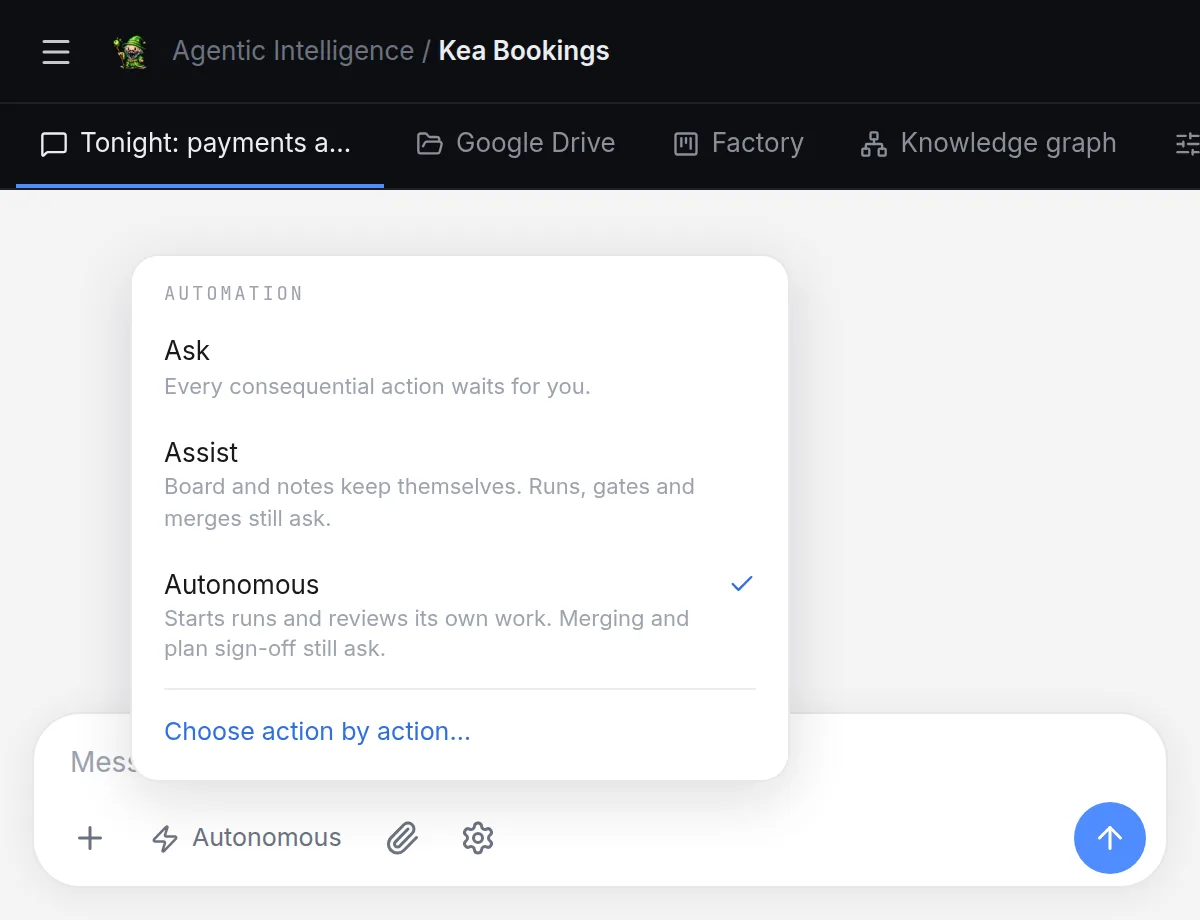
Pick a posture, or set it action by action.
Switch everything on and it can take an issue from brief to merged on its own. Merging sits in no preset, so that only happens if you turn it on by name.
What it keeps for you comes to find you: a Slack message with an Approve button, or a push to your phone. To send work back, reply in the thread with what needs to change.
How it works
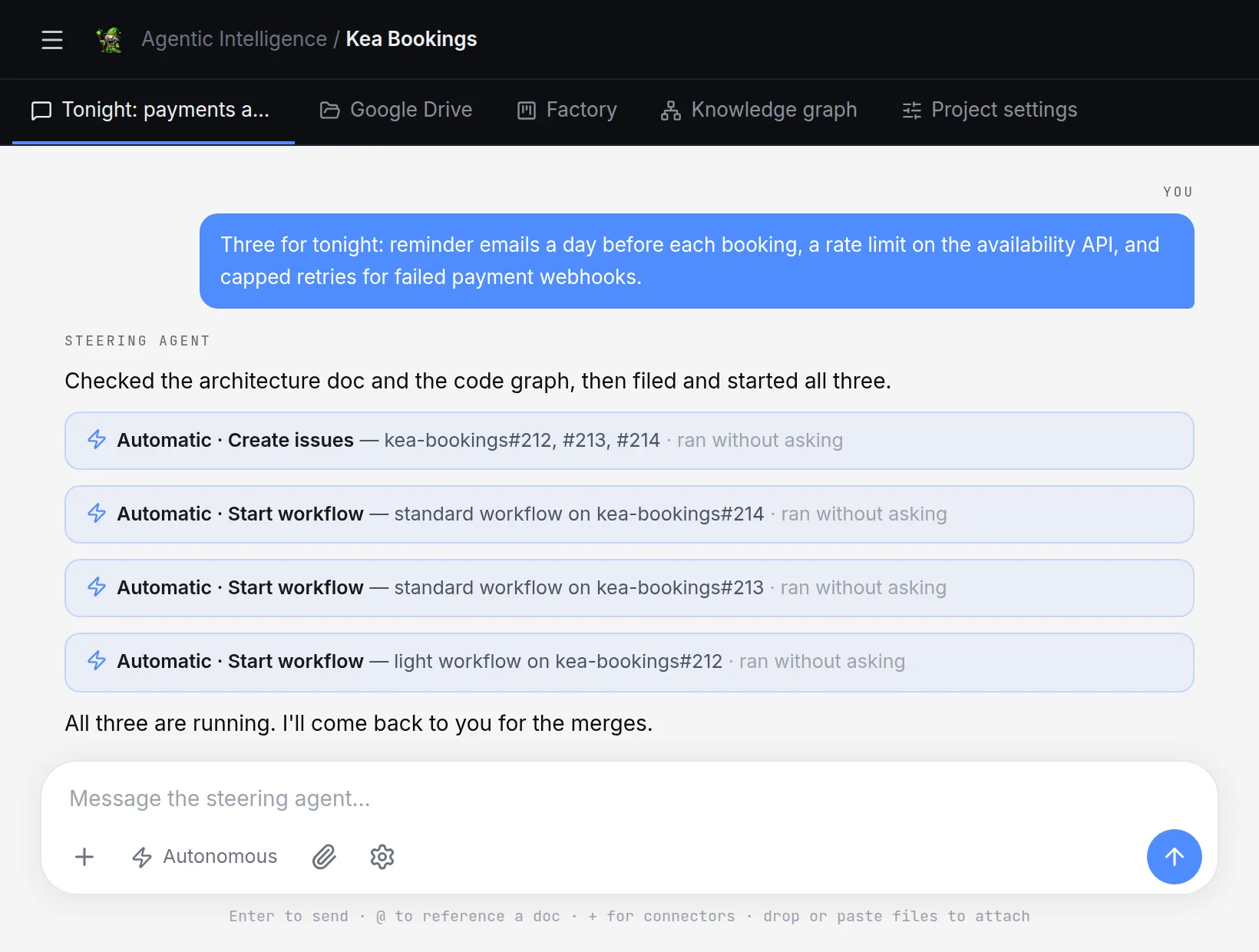
A sentence each, in steering chat. The steering agent reads the Flight Manual and the code graph, files the issues, picks a workflow for each and starts them. On Ask, you approve each start first.
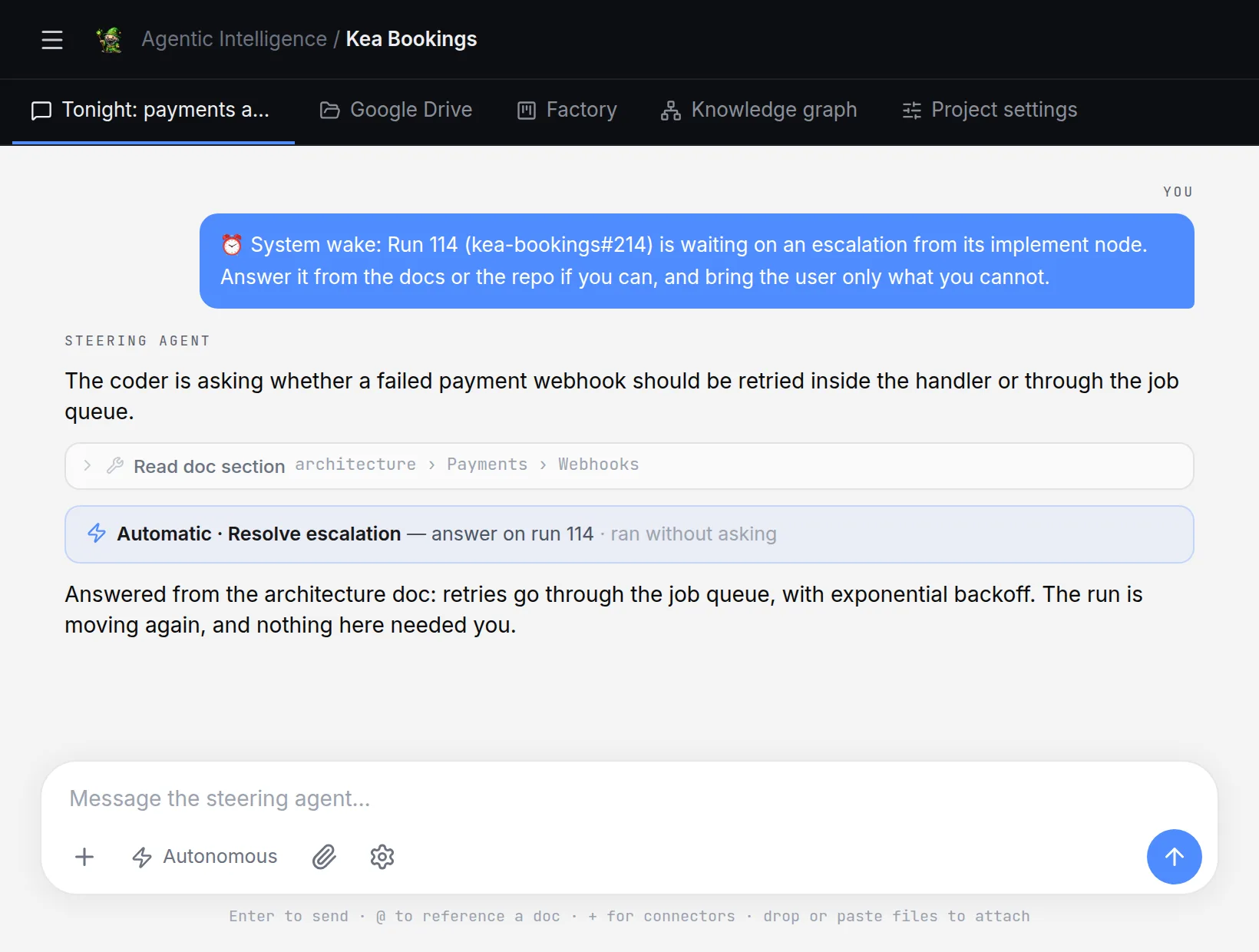
The coder asks whether retries belong in the webhook handler or the job queue. The architecture doc says the queue, so the steering agent answers, cites the doc, and the run carries on. Nobody pings you.
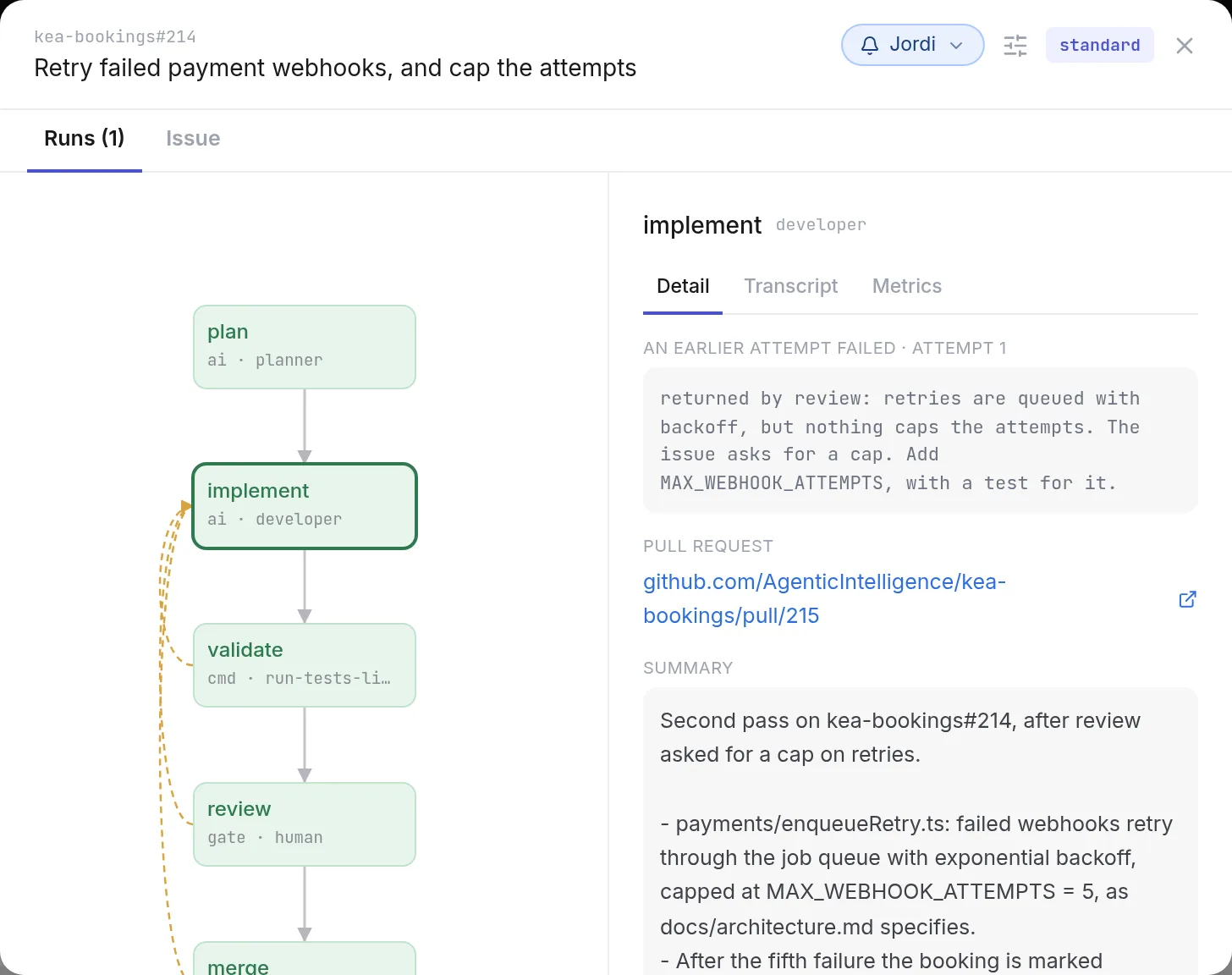
Tests pass, but the diff never caps the retries, which the issue asked for. It requests changes with a note, and the second pass adds the cap.
Three PRs wait at the merge gate, each with its tests and review attached. Approve from the notification, or from Slack.
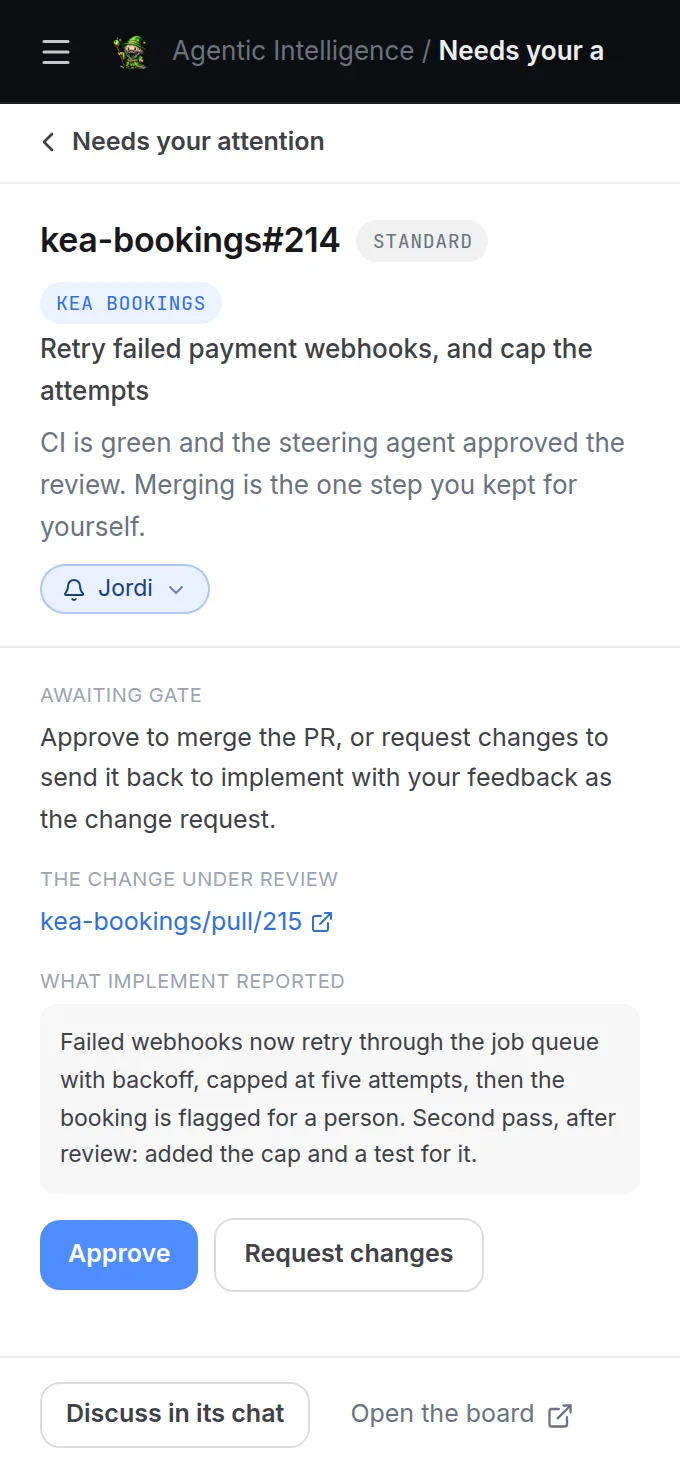
A night of agent time. A minute of yours.
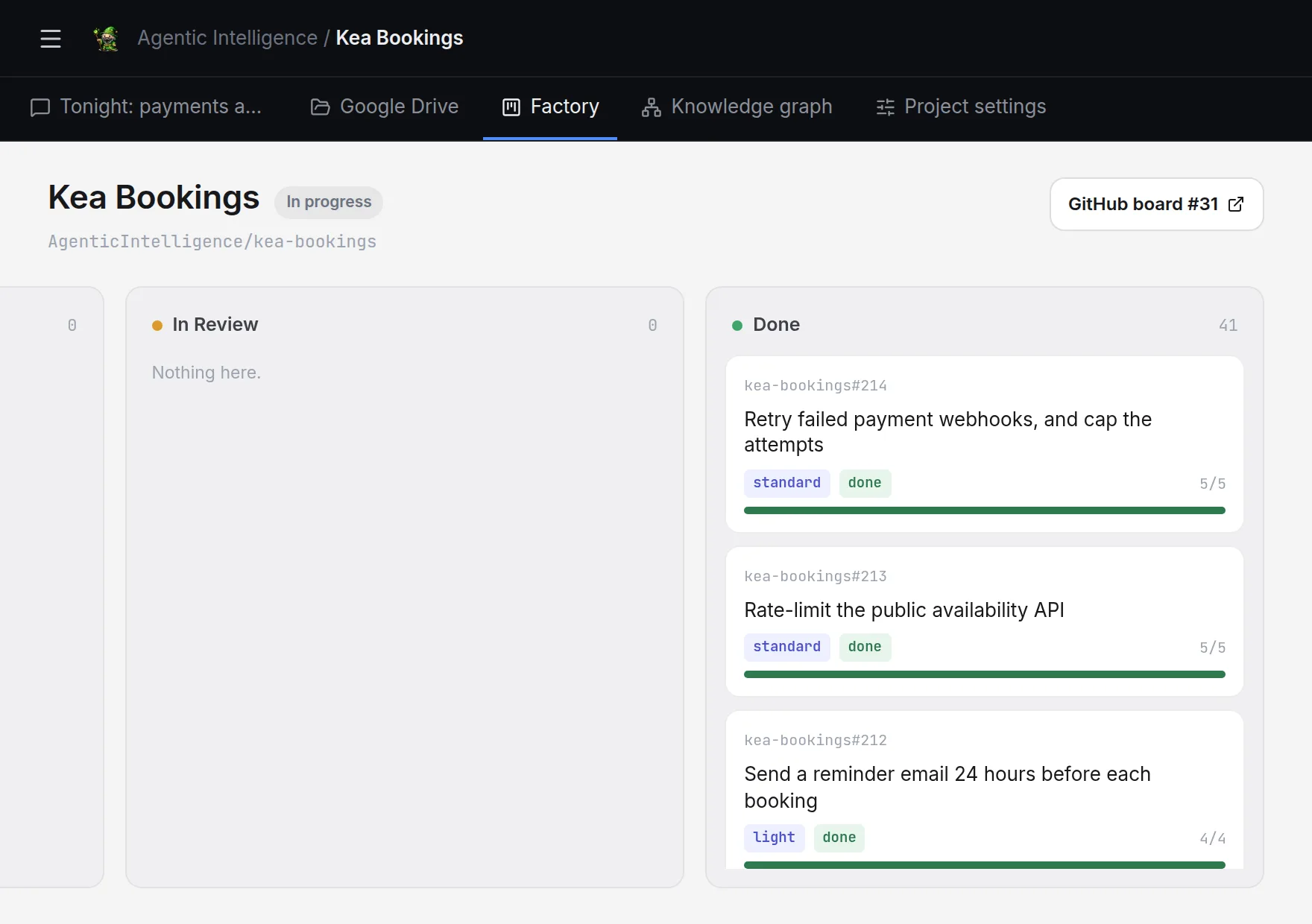
What makes it a factory
The steering agent watches the runs it starts and is woken the moment one needs something, at 3pm or 3am. It answers coders from your docs and reviews their work before anything reaches you.
Plan, implement, validate, review, merge. A workflow fixes each step’s agent, model and instructions, so the fortieth issue gets the same care as the first.
Tests, lint and typecheck run as real commands, not as a model’s opinion of them. A red result sends the work straight back to the coder.
Hand over a backlog, not a task. Each issue runs in its own sandbox, in parallel with the rest, and none of it ties up your laptop.
Every function, route and test, and how they connect, in one graph linked to the docs that explain them. Agents look up what a change will touch before they make it.
Each step runs on the cheapest model that can do it. Checks need no model at all, planning runs on Thatch with no per-token bill, and coders query the code graph instead of re-reading the repo.
Every run, in the open
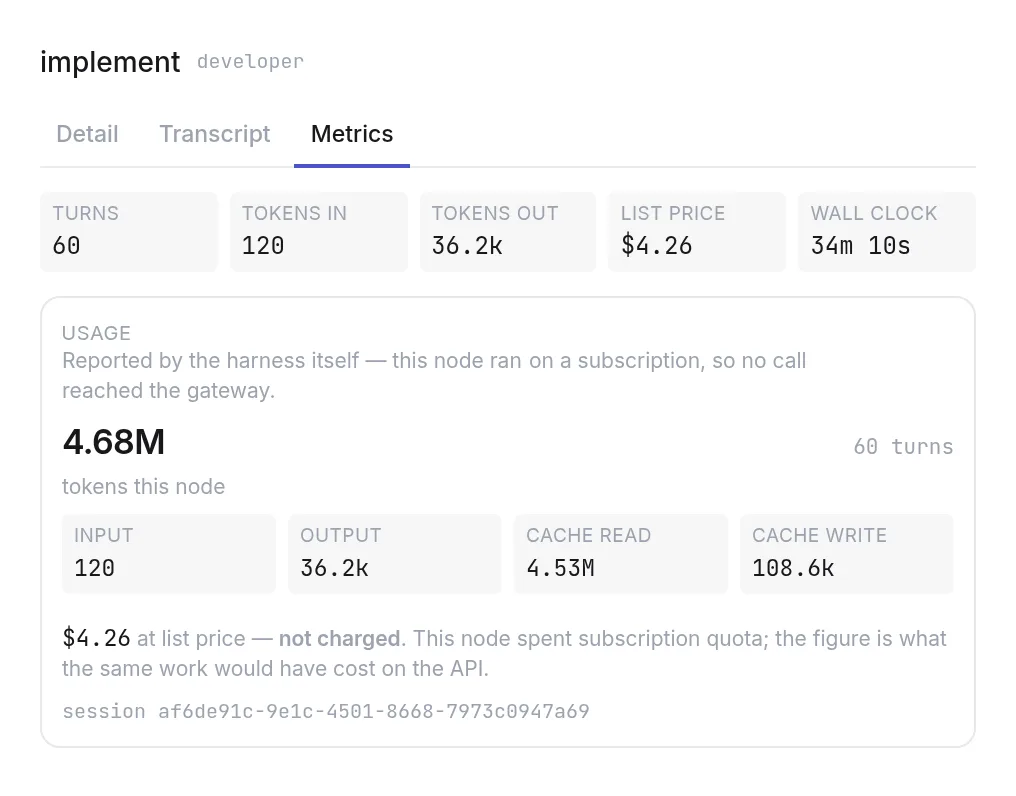
Nothing runs in someone's terminal. Runs live on the board, transcripts are stored, and every node shows its turns, tokens, cache hits and cost. A coder node can run on a third-party subscription you already pay for, so its list price is shown, not charged. When something goes wrong, the escalation is a card with the agent's last output, not a Slack message asking who was running what.

Runs on our own compute
Thatch is our own AI inference project: self-contained compute units at many sites across New Zealand rather than one large building, running on New Zealand renewables, under New Zealand law. The Software Factory is one of its anchor workloads.
Serving today
run 114 · planner
Qwen3.8 27B:tt on Thatch
Compared honestly
The coding agents you already use are not competitors. They are harnesses a coder node runs. What a single agent cannot give you is everything around it.
| Mission Control | One coding agent | |
|---|---|---|
| Several agents on one issue, in a workflow with gates | Yes | No |
| Keeps running while you are away | Yes | Partly, one session at a timepartly |
| Approval gates before review and merge | Yes | No |
| Comes to your phone when a decision needs you | Yes | Partly, one session at a timepartly |
| Whole team sees every run, transcript and cost | Yes | No |
| Pick the model per step, including our own on Thatch | Yes | No |
| Project context the agents read before they start | Yes | Partly, one session at a timepartly |
● yes · ◐ partly, one session at a time · ○ no
Mission Control is by invite while we bring colleagues on. If you have an account, go in.